
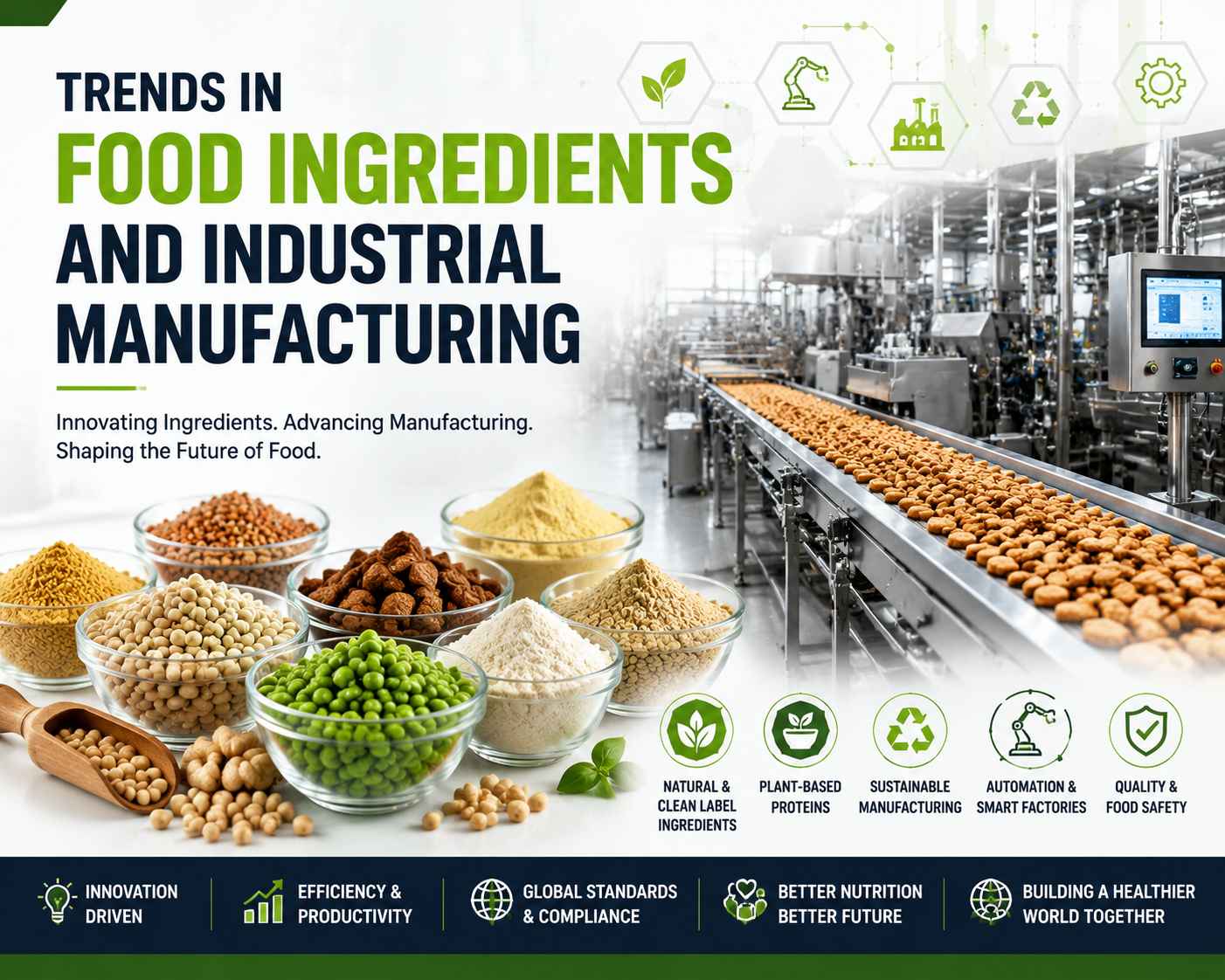
Trends in Food Ingredients and Industrial Manufacturing
The global food industry is undergoing a remarkable transformation, driven by technological advancements, changing consumer preferences, and increasing demand for sustainable production. At the same time, industrial manufacturing has embraced automation, digital technologies, and stricter quality standards to improve efficiency and product consistency.
Food ingredients and industrial manufacturing now work together to create safer, healthier, and higher-quality products for consumers worldwide. Manufacturers are investing in innovative ingredients, advanced processing techniques, and smart manufacturing systems to meet growing global demand while maintaining compliance with international regulations.
In this article, we explore the latest trends shaping food ingredients and industrial manufacturing and how these innovations are transforming the future of food production.
Growing Demand for Natural Food Ingredients
Consumers today prefer products made from clean-label and natural ingredients. They carefully read product labels and choose foods free from artificial preservatives, colors, and flavors.
Popular natural ingredients include:
- Organic Herbs & Spices
- Natural Sweeteners
- Plant-Based Proteins
- Fruit Extracts
- Vegetable Powders
- Functional Fibers
Natural ingredients improve product quality while supporting healthier lifestyles.
Rise of Plant-Based Food Production
Plant-based foods continue to dominate global food trends.
Manufacturers are increasingly using ingredients such as:
- Pea Protein
- Soy Protein
- Chickpea Flour
- Oat Fiber
- Rice Protein
- Lentil Protein
These ingredients help develop healthier alternatives for dairy, meat, bakery, and snack products.
Smart Industrial Manufacturing
Modern factories now use smart manufacturing technologies that improve productivity and reduce production costs.
Key innovations include:
- Artificial Intelligence (AI)
- Robotics
- Automated Packaging
- Smart Sensors
- Machine Learning
- Industrial IoT (Internet of Things)
These technologies improve efficiency while reducing human error.
Sustainable Manufacturing Practices
Sustainability has become one of the biggest priorities for manufacturers worldwide.
Leading companies now focus on:
- Energy-Efficient Equipment
- Water Conservation
- Eco-Friendly Packaging
- Waste Reduction
- Renewable Energy
- Carbon Footprint Reduction
Sustainable manufacturing benefits both businesses and the environment.
Food Safety and Quality Standards
Global buyers expect products that comply with international food safety regulations.
Manufacturers now follow strict standards such as:
- HACCP
- ISO Certifications
- GMP (Good Manufacturing Practices)
- FSSAI Compliance
- FDA Standards
- Export Quality Testing
Strong quality control builds trust and strengthens global business relationships.
Automation in Food Processing
Automation has significantly improved food manufacturing.
Benefits include:
- Faster Production
- Reduced Labor Costs
- Consistent Product Quality
- Better Hygiene
- Higher Productivity
- Improved Traceability
Automated production lines also reduce contamination risks.
Growing Demand for Functional Food Ingredients
Consumers increasingly seek foods that offer health benefits beyond basic nutrition.
Popular functional ingredients include:
- Probiotics
- Prebiotics
- Dietary Fiber
- Omega-3
- Vitamins
- Minerals
- Antioxidants
These ingredients support immunity, digestion, and overall wellness.
Digital Supply Chain Management
Modern manufacturers are adopting digital supply chain solutions to improve inventory management and logistics.
Advantages include:
- Real-Time Tracking
- Better Inventory Control
- Faster Deliveries
- Lower Operational Costs
- Improved Customer Satisfaction
Technology helps businesses respond quickly to changing market demands.
Private Label & OEM Manufacturing
Private label manufacturing is becoming increasingly popular worldwide.
Businesses prefer OEM manufacturers because they offer:
- Customized Products
- Brand Packaging
- Flexible Production
- Cost-Effective Solutions
- Global Export Support
- High Manufacturing Standards
This allows companies to launch products quickly without investing in production facilities.
Future of Food Ingredients and Industrial Manufacturing
The future of the industry will be driven by innovation, automation, and sustainability.
Emerging trends include:
- AI-Based Manufacturing
- Smart Food Factories
- Sustainable Packaging
- Plant-Based Nutrition
- Personalized Nutrition
- Clean Label Products
- Digital Quality Control
- Advanced Food Processing Technologies
Companies adopting these technologies will remain competitive in global markets.
Benefits for Businesses
Businesses embracing modern food ingredients and manufacturing technologies gain several advantages:
- Better Product Quality
- Increased Production Efficiency
- Reduced Manufacturing Costs
- Stronger Brand Reputation
- Higher Customer Satisfaction
- Global Export Opportunities
- Compliance with International Standards
Conclusion
Food ingredients and industrial manufacturing are evolving together to create safer, healthier, and more sustainable products. As technology continues to advance, manufacturers are adopting automation, clean-label ingredients, and environmentally friendly production methods to meet growing consumer expectations.
Companies that invest in innovation, quality control, and sustainable manufacturing will be well-positioned to succeed in the competitive global marketplace. The future belongs to businesses that embrace change while delivering high-quality products that meet international standards.
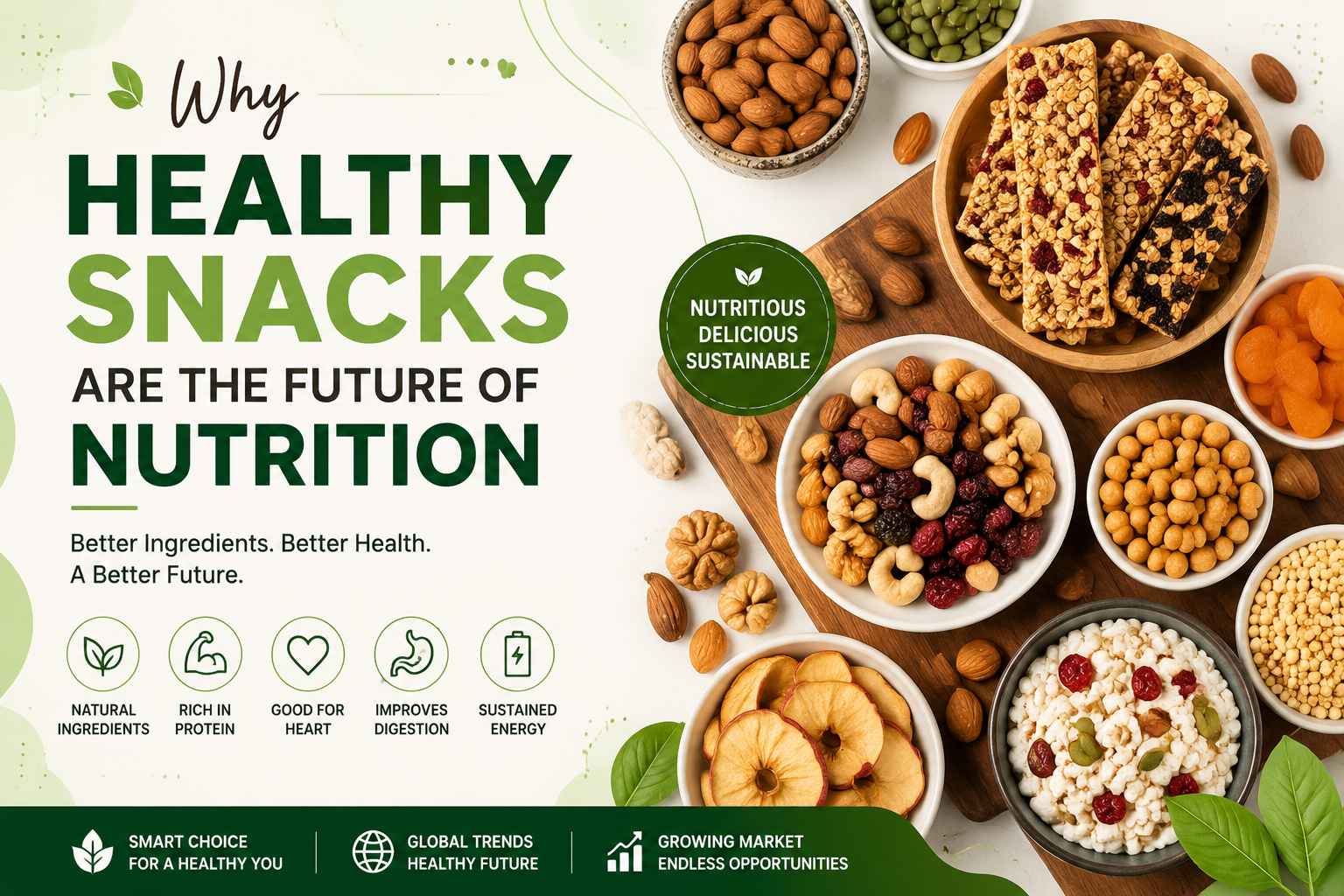
Why Healthy Snacks Are the Future of Nutrition
Healthy eating has become more than just a lifestyle trend—it is now a global movement. As consumers become increasingly health-conscious, the demand for nutritious, convenient, and delicious snack options continues to rise. People no longer want snacks filled with artificial flavors, excessive sugar, and unhealthy fats. Instead, they are choosing products made with natural ingredients, high-quality proteins, whole grains, fruits, nuts, and seeds.
The healthy snack industry has experienced remarkable growth over the past decade. Busy lifestyles, changing dietary habits, and increasing awareness of nutrition have encouraged consumers to replace traditional junk food with healthier alternatives. From protein bars and roasted nuts to baked chips and fruit snacks, healthy snacks have become an essential part of daily nutrition.
In this article, we'll explore why healthy snacks are the future of nutrition, the latest market trends, and how businesses can benefit from this rapidly expanding industry.
The Rising Demand for Healthy Snacks
Consumers around the world are becoming more aware of how food impacts their overall health. Rising cases of obesity, diabetes, and heart disease have encouraged people to choose healthier eating habits.
Healthy snacks provide an easy way to maintain energy levels while supplying essential nutrients throughout the day. As a result, retailers, food manufacturers, and exporters are investing heavily in innovative snack products that meet modern consumer expectations.
Why Consumers Prefer Healthy Snacks
Today's consumers expect more from their food than ever before.
They look for snacks that are:
- Rich in protein
- High in dietary fiber
- Low in sugar
- Low in unhealthy fats
- Made from natural ingredients
- Free from artificial preservatives
- Easy to carry and consume
Healthy snacks satisfy hunger while supporting better nutrition and overall wellness.
Popular Types of Healthy Snacks
The healthy snack market offers a wide variety of products suitable for different lifestyles and dietary preferences.
Some of the most popular categories include:
Protein Snacks
Protein-rich snacks help build muscles, improve recovery, and keep people full for longer.
Examples include:
- Protein Bars
- Roasted Chickpeas
- Mixed Nuts
- Trail Mix
- Peanut Butter Snacks
Fruit-Based Snacks
Natural fruit snacks are packed with vitamins, minerals, and antioxidants.
Popular options include:
- Dried Fruits
- Freeze-Dried Fruits
- Fruit Chips
- Fruit Bars
- Mixed Berry Snacks
Whole Grain Snacks
Whole grains provide long-lasting energy while supporting digestive health.
Examples include:
- Granola Bars
- Oat Cookies
- Whole Wheat Crackers
- Multigrain Chips
- Puffed Rice Snacks
Plant-Based Snacks
Plant-based snacks continue to gain popularity among vegan and vegetarian consumers.
Common products include:
- Lentil Chips
- Pea Protein Crisps
- Soy Snacks
- Quinoa Snacks
- Plant Protein Bars
Nutritional Benefits of Healthy Snacks
Healthy snacks provide more than just convenience.
They offer numerous nutritional benefits, including:
Improved Energy Levels
Nutritious snacks provide slow-releasing carbohydrates and healthy fats that keep energy levels stable throughout the day.
Better Weight Management
Protein and fiber-rich snacks help control hunger, reducing unnecessary calorie intake between meals.
Heart Health
Healthy snacks made with nuts, seeds, and whole grains contain healthy fats that support cardiovascular health.
Improved Digestion
Foods rich in dietary fiber promote better digestion and maintain gut health.
Stronger Immunity
Snacks containing vitamins, minerals, and antioxidants strengthen the immune system and protect against illness.
Food Industry Trends Driving Healthy Snacks
Several major trends are transforming the healthy snack industry.
Clean Label Products
Consumers prefer products with simple ingredient lists and no artificial additives.
Organic Ingredients
Organic snacks are becoming increasingly popular due to growing environmental awareness.
High Protein Products
Fitness-conscious consumers actively seek protein-rich snacks for muscle recovery and energy.
Functional Foods
Modern snacks now include added probiotics, vitamins, collagen, and superfoods for additional health benefits.
Sustainable Packaging
Environmentally friendly packaging is becoming an important factor influencing purchasing decisions.
Why Businesses Should Invest in Healthy Snacks
The healthy snack industry presents enormous opportunities for food manufacturers, exporters, wholesalers, and retailers.
Key advantages include:
- Growing global demand
- Higher profit margins
- Expanding export opportunities
- Increasing consumer awareness
- Strong retail growth
- Long-term market potential
- Innovation opportunities
Companies that focus on quality, nutrition, and sustainability can build strong brands in this rapidly growing market.
Choosing the Right Healthy Snack Manufacturer
Selecting a reliable manufacturer is essential for maintaining product quality and customer satisfaction.
Look for manufacturers that offer:
- Premium ingredients
- International quality certifications
- Modern production facilities
- Strict quality control
- Competitive pricing
- Custom packaging
- Private Label & OEM Manufacturing
- Reliable export services
A trusted supplier ensures consistent product quality while meeting international food safety standards.
Future of Healthy Snacks
The future of healthy snacks looks brighter than ever.
As consumers continue to prioritize health and wellness, demand for innovative snack products will continue to increase. New product development, clean-label ingredients, plant-based nutrition, and sustainable manufacturing practices will define the next generation of healthy foods.
Manufacturers that embrace innovation and maintain high-quality standards will lead the global healthy snack market for years to come.
Conclusion
Healthy snacks are transforming the future of nutrition by offering consumers delicious, convenient, and nutrient-rich alternatives to traditional processed foods. From protein-rich snacks and whole grains to plant-based products and organic ingredients, today's healthy snack market is driven by innovation, quality, and wellness.
Businesses that invest in premium ingredients, sustainable manufacturing, and customer-focused product development will be well-positioned to succeed in this fast-growing industry. As the demand for healthier lifestyles continues to rise, healthy snacks will remain one of the most important segments of the global food market.
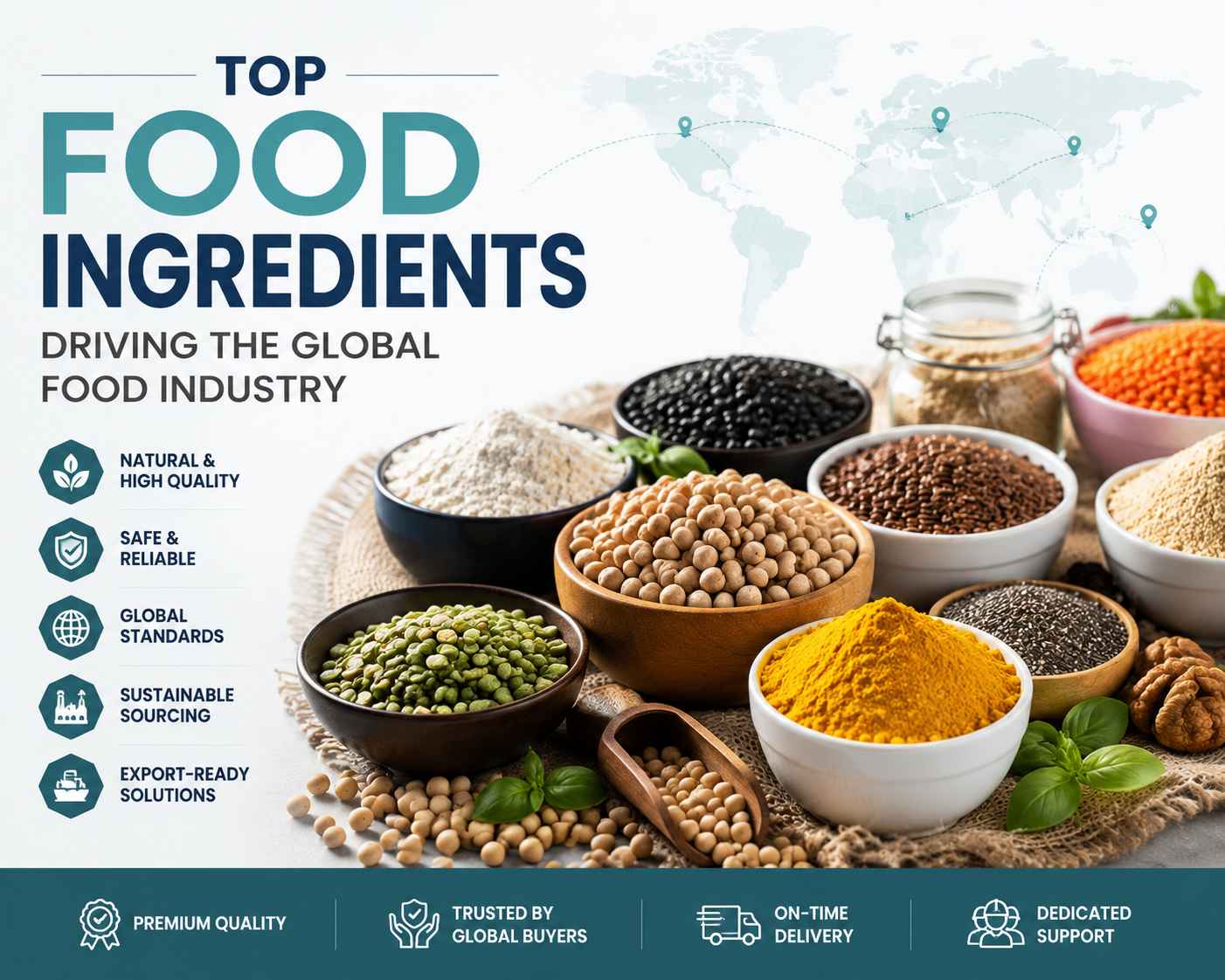
Top Food Ingredients Driving the Global Food Industry
The global food industry is evolving rapidly as consumers demand healthier, safer, and more sustainable food products. Food manufacturers are constantly looking for premium-quality ingredients that improve taste, texture, nutrition, and shelf life while meeting international quality standards.
From natural sweeteners and plant-based proteins to functional additives and organic spices, food ingredients have become the foundation of modern food production. As global trade expands, manufacturers and exporters are focusing on innovative ingredients that meet the growing needs of food brands worldwide.
In this article, we explore the top food ingredients driving the global food industry and why they are essential for food manufacturers, retailers, and consumers.
1. Plant-Based Proteins
Plant-based proteins are one of the fastest-growing food ingredient categories. They are widely used in meat alternatives, dairy-free products, protein bars, and healthy snacks.
Benefits
- Rich in protein
- Suitable for vegan products
- Sustainable production
- High consumer demand
- Supports healthy lifestyles
Common sources include soy protein, pea protein, rice protein, and chickpea protein.
2. Natural Sweeteners
Consumers are reducing refined sugar consumption and choosing healthier alternatives.
Popular natural sweeteners include:
- Stevia
- Monk Fruit Extract
- Coconut Sugar
- Honey
- Date Syrup
These ingredients help manufacturers create healthier products without compromising taste.
3. Organic Herbs and Spices
Organic herbs and spices continue to dominate the global food ingredient market because of their flavor, health benefits, and clean-label appeal.
Popular options include:
- Turmeric
- Black Pepper
- Cumin
- Cinnamon
- Ginger
- Coriander
These ingredients are widely used in packaged foods, ready-to-eat meals, beverages, and nutraceutical products.
4. Functional Food Ingredients
Consumers increasingly seek foods that provide additional health benefits beyond basic nutrition.
Examples include:
- Dietary Fiber
- Probiotics
- Omega-3 Oils
- Vitamins
- Minerals
- Antioxidants
Functional ingredients help improve digestion, immunity, heart health, and overall wellness.
5. Natural Food Preservatives
Food safety and shelf-life extension remain critical for manufacturers and exporters.
Popular natural preservatives include:
- Vinegar
- Salt
- Citric Acid
- Rosemary Extract
- Natural Antioxidants
These ingredients help maintain product freshness while reducing the need for synthetic chemicals.
6. Food Emulsifiers and Stabilizers
Food manufacturers rely on emulsifiers and stabilizers to improve product consistency, texture, and appearance.
Common ingredients include:
- Lecithin
- Xanthan Gum
- Guar Gum
- Pectin
- Carrageenan
They are widely used in bakery products, beverages, sauces, dairy products, and confectionery.
7. Healthy Oils and Fats
Healthy edible oils are becoming increasingly popular due to rising awareness about heart health and nutrition.
Examples include:
- Olive Oil
- Sunflower Oil
- Avocado Oil
- Coconut Oil
- Rice Bran Oil
These oils are commonly used in cooking, processed foods, and nutritional products.
Why High-Quality Food Ingredients Matter
Premium food ingredients provide several advantages for manufacturers and consumers.
- Consistent product quality
- Better nutritional value
- Improved taste and texture
- Longer shelf life
- Compliance with international food safety standards
- Increased customer satisfaction
- Better export opportunities
Businesses that invest in high-quality ingredients gain a competitive advantage in domestic and international markets.
Global Market Trends
The food ingredient industry continues to grow due to several major trends:
- Growing demand for organic products
- Expansion of plant-based foods
- Clean-label product development
- Sustainable ingredient sourcing
- Health-focused consumer preferences
- Increased global food exports
- Advanced food processing technologies
These trends are expected to drive continuous innovation across the food manufacturing sector.
Choosing the Right Food Ingredient Supplier
Selecting a trusted supplier is essential for maintaining product quality and meeting customer expectations.
Look for suppliers that offer:
- International quality certifications
- Consistent product quality
- Reliable supply chain
- Competitive pricing
- Customized ingredient solutions
- Global export experience
- Strict quality control procedures
A dependable supplier helps businesses maintain production efficiency while meeting international food regulations.
Conclusion
Food ingredients are the backbone of the global food industry. From plant-based proteins and natural sweeteners to organic spices and functional ingredients, the demand for premium-quality ingredients continues to grow worldwide.
Businesses that choose reliable food ingredient suppliers and adopt innovative ingredient solutions are better positioned to meet changing consumer preferences and expand into international markets. As the industry evolves, high-quality food ingredients will remain a key driver of product innovation, sustainability, and long-term business success.